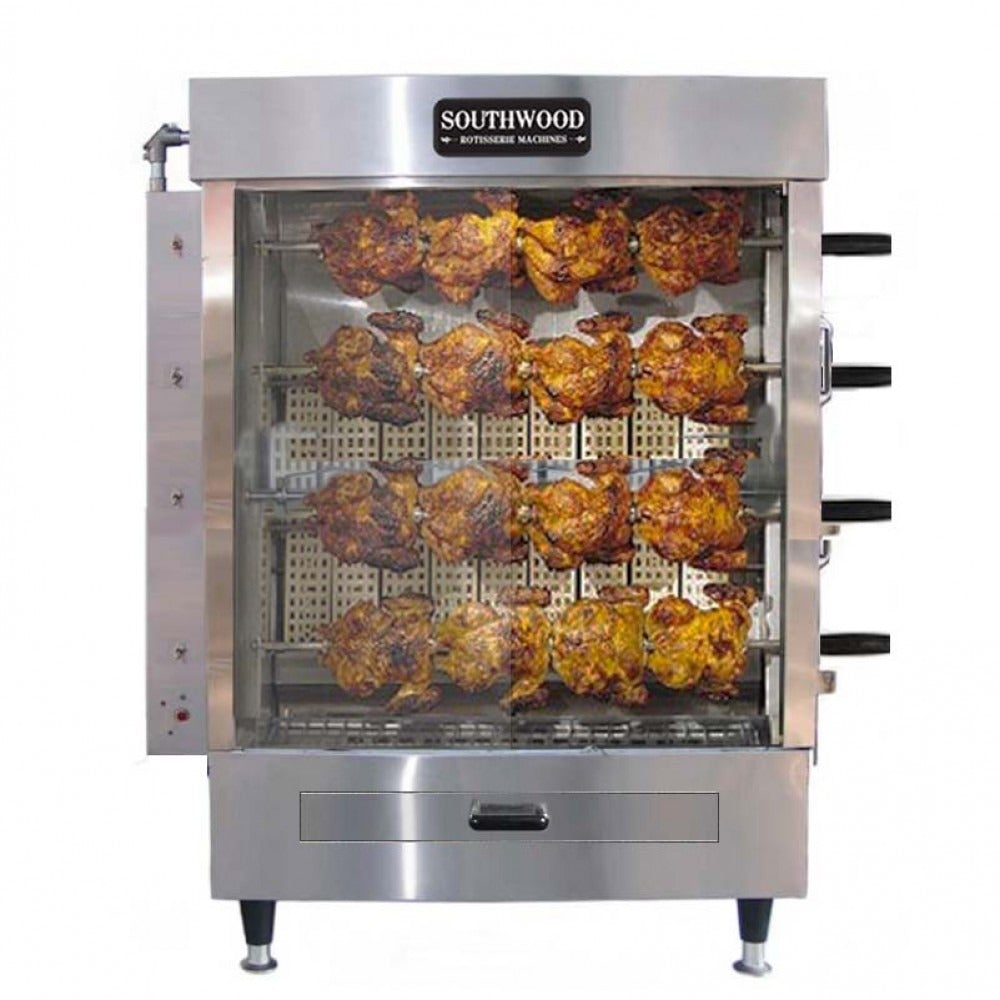
Chicken Rotisserie Ovens
Commercial chicken rotisserie ovens are made for high-volume, consistent cooking. If you run a deli, restaurant, supermarket, or catering business, this is the equipment you need for reliable output. Gas and electric models come in different sizes to match your kitchen and volume requirements.
Filters
-
Cookline ER-268 40" 12 Chicken Batch Electric Rotisserie Oven, 220V
Original price $1,939.99 - Original price $1,939.99Original price$1,939.99$1,939.99 - $1,939.99Current price $1,939.99| /FREE SHIPPING
This Cookline ER-268 40" 12 chicken electric batch rotisserie oven features stainless steel construction. Temperature controls allow you to keep yo...
View full detailsOriginal price $1,939.99 - Original price $1,939.99Original price$1,939.99$1,939.99 - $1,939.99Current price $1,939.99| / -
Cookline GR-268 40" 12 Chicken Batch Gas Rotisserie Oven, 115v
Original price $1,939.99 - Original price $1,939.99Original price$1,939.99$1,939.99 - $1,939.99Current price $1,939.99| /FREE SHIPPING
This Cookline GR-268 40" 12 chicken batch gas rotisserie oven features stainless steel construction. Temperature controls allow you to keep your ch...
View full detailsOriginal price $1,939.99 - Original price $1,939.99Original price$1,939.99$1,939.99 - $1,939.99Current price $1,939.99| /
Common Types and Configurations
- Gas chicken rotisserie ovens: Lower operating costs and quick heat recovery. Best for high-volume kitchens running several loads daily.
- Electric chicken rotisserie ovens: Easier to install and offer precise temperature control. Choose these if you don't have a gas line or need tight temperature consistency.
- Small commercial rotisserie ovens: Compact units for lower volume or tight spaces.
- Large commercial rotisserie ovens: High capacity models for grocery stores, supermarkets, and busy kitchens.
What to Look at Before You Buy
- Capacity: Measured by chickens per load. Match the oven size to your busiest periods. A small cafe needs less than a grocery store deli running all day.
- Gas or electric: Gas units cost less to operate but require a gas line and licensed installer. Electric units are easier to set up and give you more precise control.
- Spit or basket style: Spit ovens rotate chickens on skewers for classic presentation. Basket ovens tumble chickens in wire baskets and handle higher volume.
- Heat source placement: Rear heat ovens cook more evenly and suit larger models. Front heat is typical in countertop units.
- Controls: Manual controls are fine for simple operations. Digital controls let you program cook cycles for consistency between staff.
- Size and footprint: Measure your space before you buy. Bigger units need more floor space and proper ventilation.
- Installation: Gas units need a licensed installer and a commercial hood. Electric units require the right voltage and amperage.
Frequently Asked Questions
What is the difference between a gas and electric commercial rotisserie oven?
Gas rotisserie ovens heat up quickly and cost less to run. They're best for high-volume kitchens with a gas line. Electric ovens are easier to install, give you precise temperature control, and work where gas isn't available. Both types deliver great results. Choose based on your kitchen setup and budget.
How many chickens can a commercial rotisserie oven hold?
Capacity depends on the model. Small units hold 8 to 12 chickens per load. Mid-size models handle 16 to 24. Large units for grocery stores and delis can hold 30 or more at once. Match the oven size to your busiest times to avoid bottlenecks.
What should I look for when buying a commercial chicken rotisserie oven?
Start with capacity and fuel type. Next, choose spit or basket style to match your menu. Check controls, ventilation, and installation before you order. For high-volume kitchens, rear heat models with digital controls give the most consistent results.